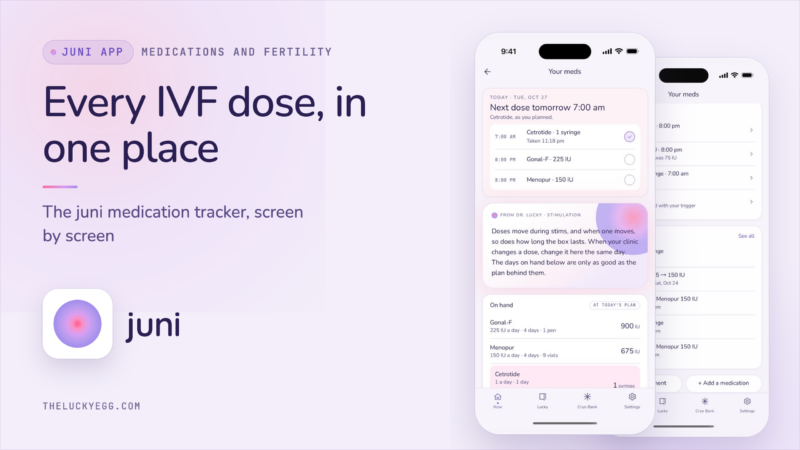



The medication boxes come first. You separate the pens from the vials, check the units for each dose and try to hit the same 2-3 hour injection window every day. Then the nurse calls with three follicle sizes and an estradiol level, and the next time someone asks, you’re expected to have them.
I write those instructions. I know what you’re carrying. It really is like learning a new language, on top of everything else a cycle involves.
I’m a fertility doctor who went through IVF myself, and I am the founder of juni, a comprehensive IVF companion app that keeps your medications, monitoring numbers and embryo updates in one place. You shouldn’t have to piece your cycle together before every call. If you want the full picture of a cycle first, read my IVF timeline.
I’m Dr. Lucky Sekhon, a double board-certified reproductive endocrinologist in NYC and the author of The Lucky Egg. For years I’ve been on a mission on Instagram and in The Lucky Egg Drop to demystify fertility care. With juni, I wanted to simplify the daily work of managing that care too. Here’s why.

I write the instructions, and I have had to follow them
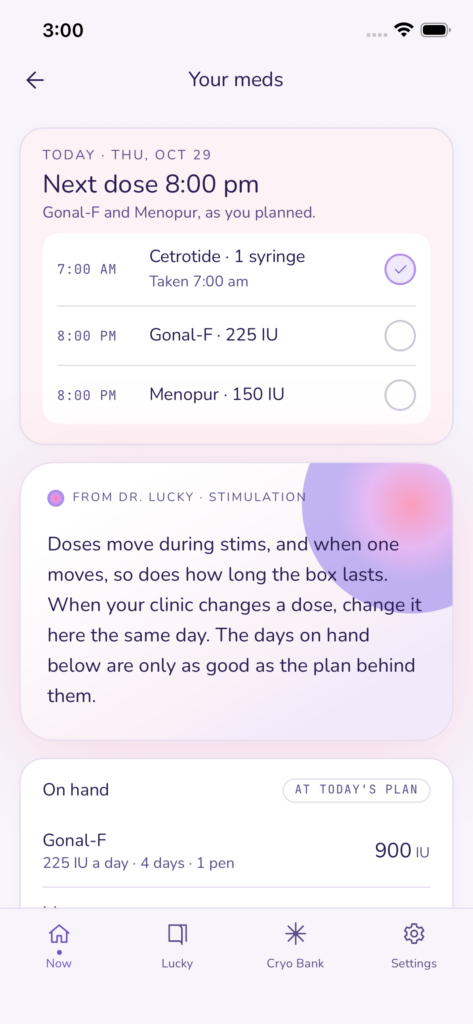
When I scan a patient during stimulation, I look at her follicle growth and her hormone levels and decide whether to change her dose. The plan she started on the first day is often not the plan she’s on by the sixth. For me, that’s a routine clinical decision. For her, it’s one more call, one more set of numbers to write down and one more set of instructions to get right that night.
I know that call from both sides. In 2017, at 34, I froze embryos with my husband, Bobby. I went through several retrieval cycles: one was cancelled because only one follicle grew, and another gave me two mature eggs. I went in overconfident, thinking that my training made me ready for this. I totally was not.
I know how complicated that shot is when you are the one giving it. Sometimes you’re mixing liquid into powder, checking the units and watching the clock. That’s why I tell every patient I scan who might trigger that night to make sure she has the medication and to lay everything out 10-15 minutes before her exact trigger time. I’ve written that instruction. And I’ve followed it at my own kitchen counter.
The three chores juni takes off your plate
Keeping the medication plan straight when it changes
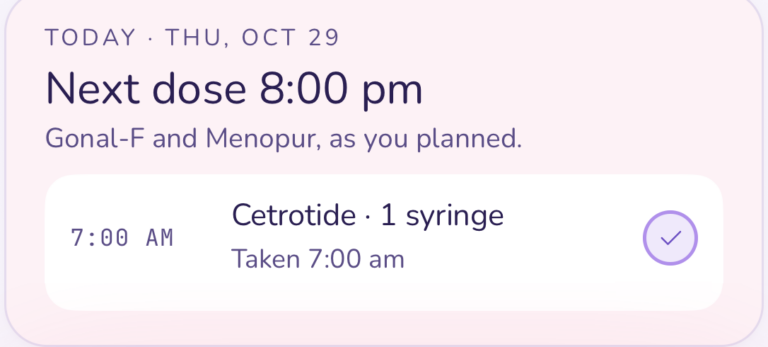
The nurse calls with a new stimulation dose. You cross out the old one on the printout and then wonder: which pen was that for? In juni, you enter the stimulation and trigger-shot plan your clinic gives you, check off each dose as you take it, get reminders at your times and see how many days of medication you have on hand. The practical details are in how medication tracking works in juni.
Writing down embryo updates when the lab calls
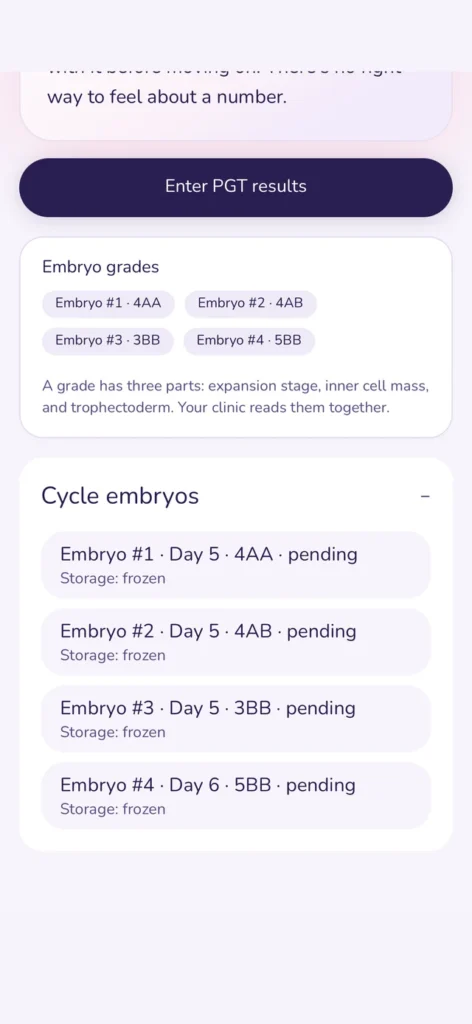
After your egg retrieval, the lab calls with the fertilization report. Then comes the day 3 update, then the count of day 5/6 blastocysts and, if you did PGT, those results. Each report arrives a few days after the last, and you’ll be asked about every number later. juni gives you an embryo record, so you can log each report as it comes in instead of hunting through old voicemails and texts.
Remembering the numbers and dates for the next call
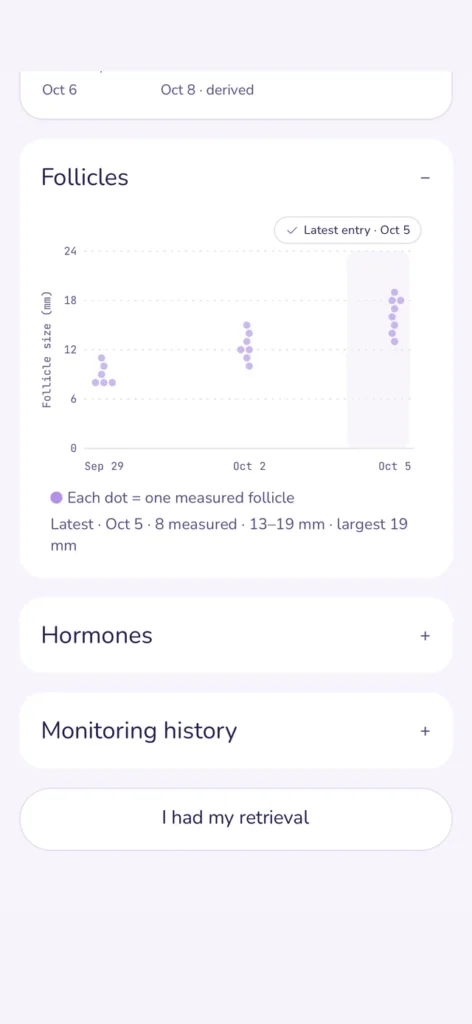
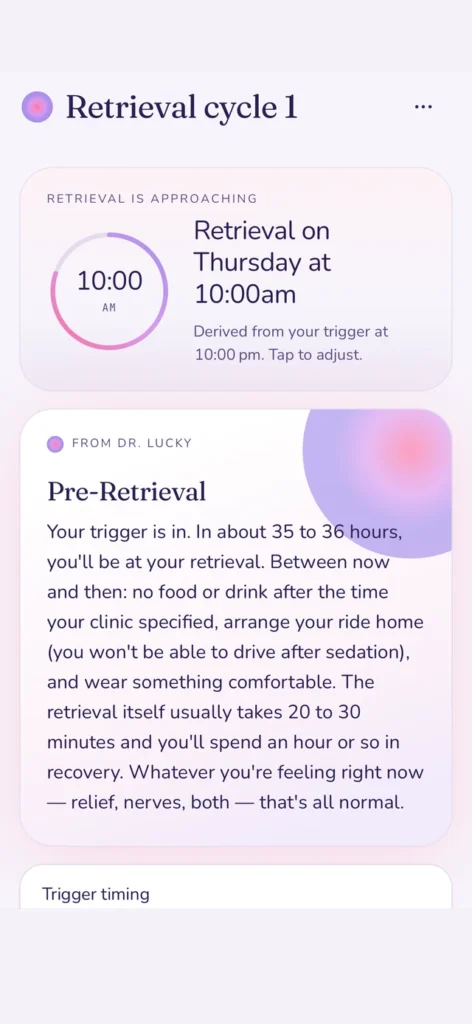
After monitoring, I read off follicle sizes and an estradiol level, and you’ll need those numbers again when you speak with the team later in the week. The monitoring log in juni keeps them visit by visit, and its cycle countdown keeps your retrieval and transfer dates in view, so you can show up to appointments informed instead of trying to remember everything retroactively.
juni is a friend, not a clinic
I wanted to be able to help people beyond the four walls of my clinic.
But I didn’t want to add another voice telling you what your numbers mean. That’s your care team’s job.
juni doesn’t interpret your follicle sizes or estradiol, tell you whether your numbers are good, adjust your dose or make treatment decisions. It stores what you enter and reminds you of the schedule you were given. The clinic makes the calls.
I’ve watched patients manage this second job with notebooks, screenshots of their patient portals and numbers written on whatever paper was at hand. Then the one detail from Tuesday goes missing by Friday, just when the nurse needs it. I wanted to make a friend you can slip into your pocket that keeps it all for you.
juni is on iPhone and Android, and your data stays on your phone. It’s for the person doing IVF at home between appointments, not a clinical tool for doctors.
Hand the second job to juni
The doses will still change, the lab will still call, and the nurse will still want Tuesday’s numbers on Friday. None of that goes away. What changes is where it lives: enter the plan your care team gives you into juni, and it keeps your doses, your numbers and your dates in one place, ready for the next call. Get juni and let it do the remembering.